Cat grooming · 5 min read
Do indoor cats need grooming?
Why indoor cats still need brushing, what happens if a cat is never groomed, how long cats spend grooming themselves, and PGH cat grooming prices.
By John, Senior groomer · Reviewed by Agnes, Manager · Published
Yes. Indoor cats need grooming too, although most need regular brushing at home more than frequent salon visits. Staying indoors does not change a cat's coat: International Cat Care says cats moult all year round, and the loose hair they swallow while self-grooming passes through the gut or comes back up as a hairball. Brushing removes that hair first. International Cat Care advises brushing shorthaired cats at least once a week and longhaired cats at least daily. If a cat is never groomed, a short-haired cat usually copes, but a Persian, Ragdoll or other long-haired cat can develop painful mats, and severe mats often have to be shaved off by a vet under sedation. A professional groom helps cats that cannot keep up. In Subang Jaya, a basic cat groom at PGH costs RM90 to RM110 for a short coat and RM100 to RM130 for a long coat, for cats under 5 kg. For how often to book by breed, see our cat grooming schedule.
Do indoor cats need grooming if they groom themselves?
Most cats spend a significant part of their day grooming, International Cat Care says. Their flexible bodies reach almost everywhere, and the backward-facing spines on the tongue remove loose hair and dirt. For a healthy short-haired cat, that does most of the work.
Self-grooming has limits:
- The hair goes somewhere. Loose hair is swallowed. Most of it passes through, and some comes back up as a hairball.
- Long coats outgrow the tongue. A cat cannot lick out a knot that has formed near the skin.
- Some cats cannot reach. Long-haired, older or overweight cats may need help with the back, belly and hindquarters.
Being indoors does not reduce shedding. An indoor cat moults all year like any other cat, so its loose hair ends up on the sofa or in its stomach unless you brush it out.
What happens if you don't groom your cat?
| Coat | If it is never brushed | What helps |
|---|---|---|
| Short coat, healthy adult | Usually copes. More loose hair swallowed and on furniture | Brush at least once a week |
| Long coat (Persian, Ragdoll, Maine Coon) | Knots and mats, often in the armpits, between the hind legs and between the toes | Comb at least daily, and a professional groom when needed |
| Older or overweight cat | Unreached areas on the back and hindquarters can turn greasy or clumped | Gentle brushing, and help from a groomer |
Mats. International Cat Care says mats form most often under the armpits, between the hind legs and between the toes and pads, where the skin is thin and sensitive. Mats are very uncomfortable. Severe mats often have to be shaved off by a vet, which can need sedation or a general anaesthetic, and the cat is left with fur only on its head, tail and lower legs until it grows back.
Hairballs. Cornell says long-haired breeds such as Persians and Maine Coons may be at greater risk of hairballs, and recommends brushing and combing daily to reduce them. Frequent hairballs, retching or vomiting are a reason to see a vet. Our cat vomiting and hairballs guide explains when to worry.
Missed fleas. International Cat Care suggests checking for flea dirt with a flea comb each time you groom. Flea dirt looks like tiny black commas that run red if you add a drop of water. See our cat fleas guide if you find any.
How long do cats spend grooming?
A lot. International Cat Care says most cats spend a significant part of their day grooming. Cornell says older cats, as experienced groomers, are likely to spend a good portion of their waking hours licking their coats.
A change in that habit can be a sign of illness. Cornell notes that excessive self-grooming may point to a skin problem such as a food allergy. Bald patches, broken hair or a cat that suddenly stops grooming need a vet. Our cat hair loss guide covers the common causes.
How do I groom an indoor cat at home?
International Cat Care's advice:
- Pick a calm moment when your cat is relaxed.
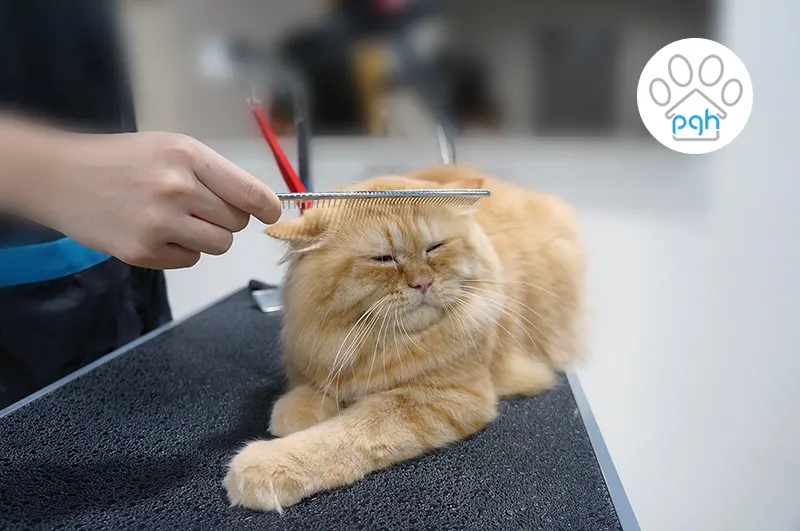
- Short coat: at least once a week. Use a fine flea comb first, then a bristle brush and a rubber grooming mitt.
- Long coat: at least daily. Use a wide-toothed comb and take care under the armpits and between the hind legs.
- Tease out small knots with your fingers, from the root towards the tip. Never cut mats out with scissors. It is very hard to see where the skin ends, and you can cut your cat.
- Stop before your cat objects. Skin twitching, tail swishing, ears turning back or a sudden freeze are signs to stop and try another day.
Kittens get used to grooming best when sessions start short and build up slowly. If your cat dislikes being handled, our article do cats like being groomed? explains what to ask before booking.
When does an indoor cat need a professional groom?
When brushing at home is not enough, for example:
- a long-haired cat with knots you cannot comb out
- a cat with a greasy or clumped coat
- an older or overweight cat that cannot reach parts of its coat
- an owner who cannot trim nails or clean ears at home
| Cat basic groom at PGH | Price |
|---|---|
| Short coat, under 5 kg | RM90–110 |
| Long coat, under 5 kg | RM100–130 |
| Kitten, under 2 kg | RM60–80 |
| Lion cut (scissor and shave), long coat | From RM180 |
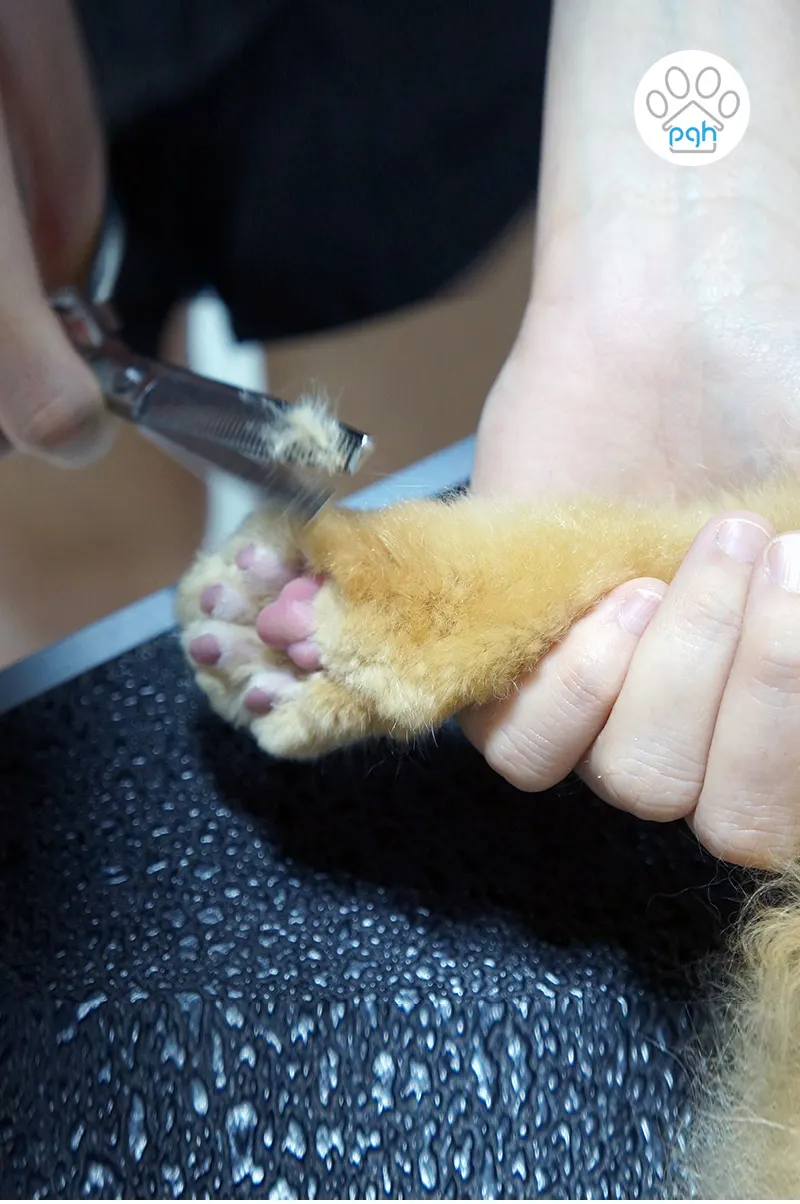
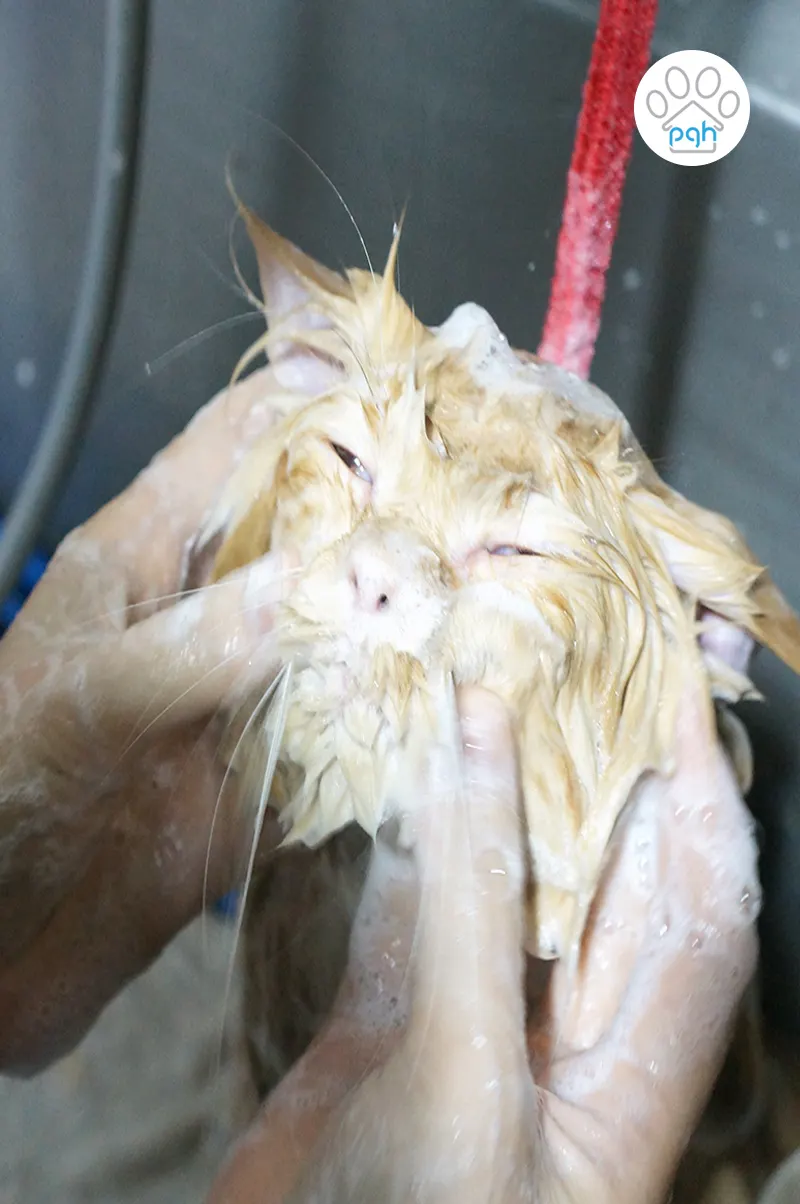
A basic groom includes a bath with massage, blow dry and full comb-out, nail trim, ear cleaning, sanitary shave and paw trim. Prices checked October 2026. Final price depends on coat condition and behaviour. Full prices and add-ons are on the cat grooming page.
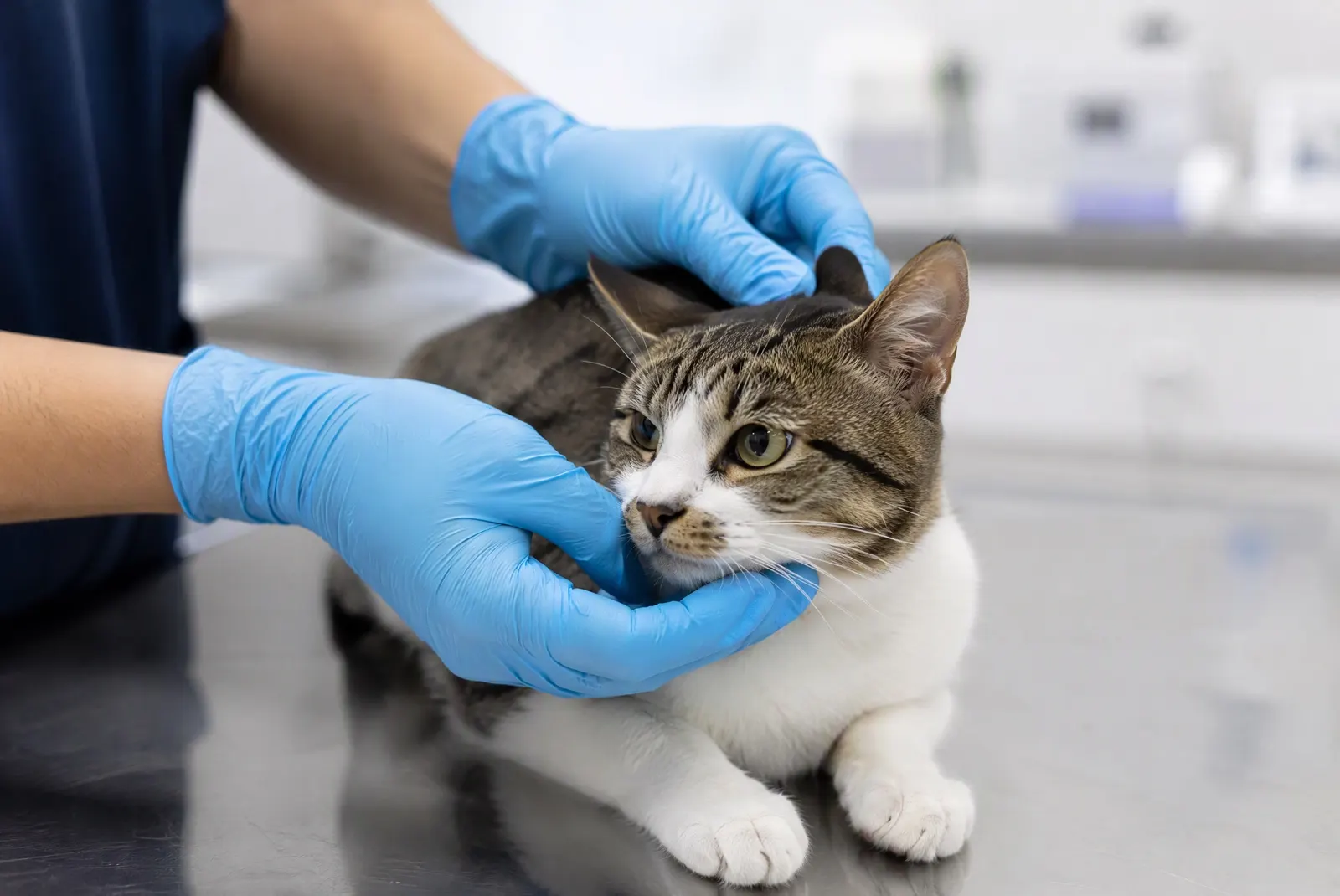
PGH is a grooming shop, not a vet clinic. If your cat's coat or skin has changed suddenly, see a vet before booking a groom.
Questions we get asked
- Do indoor cats need to be groomed?
Yes, though most need brushing more than salon visits. Indoor cats moult all year like outdoor cats. International Cat Care advises brushing shorthaired cats at least once a week and longhaired cats at least daily. A professional groom helps long-haired, senior or overweight cats that cannot keep up.
- What happens if I don't groom my cat?
A short-haired cat may cope, but swallows more loose hair, which can mean more hairballs. A long-haired cat can develop mats, which International Cat Care says are very uncomfortable. Severe mats often have to be shaved off by a vet, many times under sedation or anaesthesia.
- How long do cats spend grooming themselves?
A lot. International Cat Care says most cats spend a significant part of their day grooming, and Cornell says older cats spend a good portion of their waking hours licking their coats. A sudden increase or decrease in self-grooming is worth a vet check.
- Should I cut mats out of my cat's fur with scissors?
No. International Cat Care warns that it is very hard to see where the skin ends and the mat starts, so you can cut your cat. Tease small knots apart with your fingers, and leave larger mats to a groomer or vet.
- How much is a cat groom at PGH?
A basic groom at PGH in Subang Jaya is RM90 to RM110 for a short-coated cat under 5 kg, RM100 to RM130 for a long-coated cat under 5 kg, and RM60 to RM80 for a kitten under 2 kg. It includes a bath, blow dry, comb-out, nail trim, ear cleaning, sanitary shave and paw trim.
Sources
Written by
John, Senior groomer
Groomers and hotel staff at Pets Grooming Hotel, Main Place Mall, Subang Jaya. These guides are based on what we see on the grooming table and in the hotel every week. They are general advice, not a substitute for your vet.