Cat grooming · 2 min read
How often should cats be groomed? What long and short-haired cats actually need
A cat grooming schedule for Malaysia: brushing, bathing, nails and professional grooms for Persians, British Shorthairs, Maine Coons and domestic cats.
By PGH Team · Published · Updated
Cats groom themselves, which is why many owners assume they never need help. For a short-haired domestic cat that is nearly true. For a Persian, a Ragdoll or a senior cat with stiff joints, it is not. Here is a realistic schedule.
Short-haired cats
Domestic short hairs, British Shorthairs, Bengals and most moggies need:
- Brushing once a week with a rubber brush or fine comb to lift dead hair. This cuts down on hairballs and the fur on your sofa.
- Nails trimmed every two to three weeks.
- Ears checked monthly for dark wax or odour.
- A professional groom only when needed: many healthy short-haired cats manage with brushing alone. Book one if the coat feels greasy, dandruff appears or shedding gets out of hand, and see a vet if those changes come on suddenly.
Long-haired cats
Persians, Himalayans, Maine Coons, Ragdolls and long-haired domestics need much more:
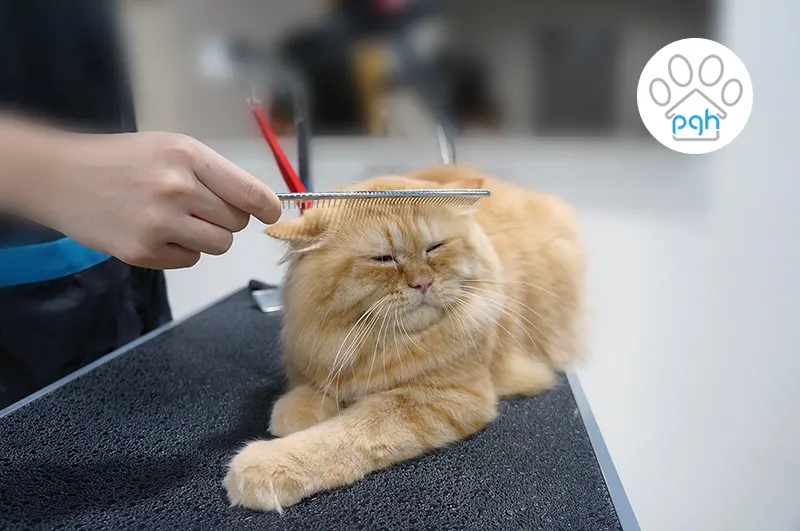
- Brushing daily, or at least every other day, with a steel comb that reaches the skin. Mats form in the armpits, belly, trousers and behind the ears first.
- Sanitary trim every four to six weeks so litter and faeces do not catch in the fur.
- A professional groom every six to eight weeks. In Malaysia's humidity this is the interval that keeps a Persian coat manageable without resorting to a full shave.
A cat groom at PGH includes a gentle massage bath, blow dry, full comb-out, nail trim, ear clearing and sanitary shaving, RM90 to 130 by coat length. Degrease washes are available for oily coats and stud tail, and a lion cut starts from RM180.
Cats that need extra help
- Seniors. Arthritic cats stop reaching their back and hindquarters. A greasy, clumpy strip along the spine is the giveaway.
- Overweight cats. Same problem, different cause.
- Flat-faced breeds. Persians and Exotics need their eyes and facial folds cleaned daily to prevent staining and infection.
- Entire males. Stud tail, the oily patch at the base of the tail, responds well to a degreasing wash.
Why cats hate baths, and how groomers manage it
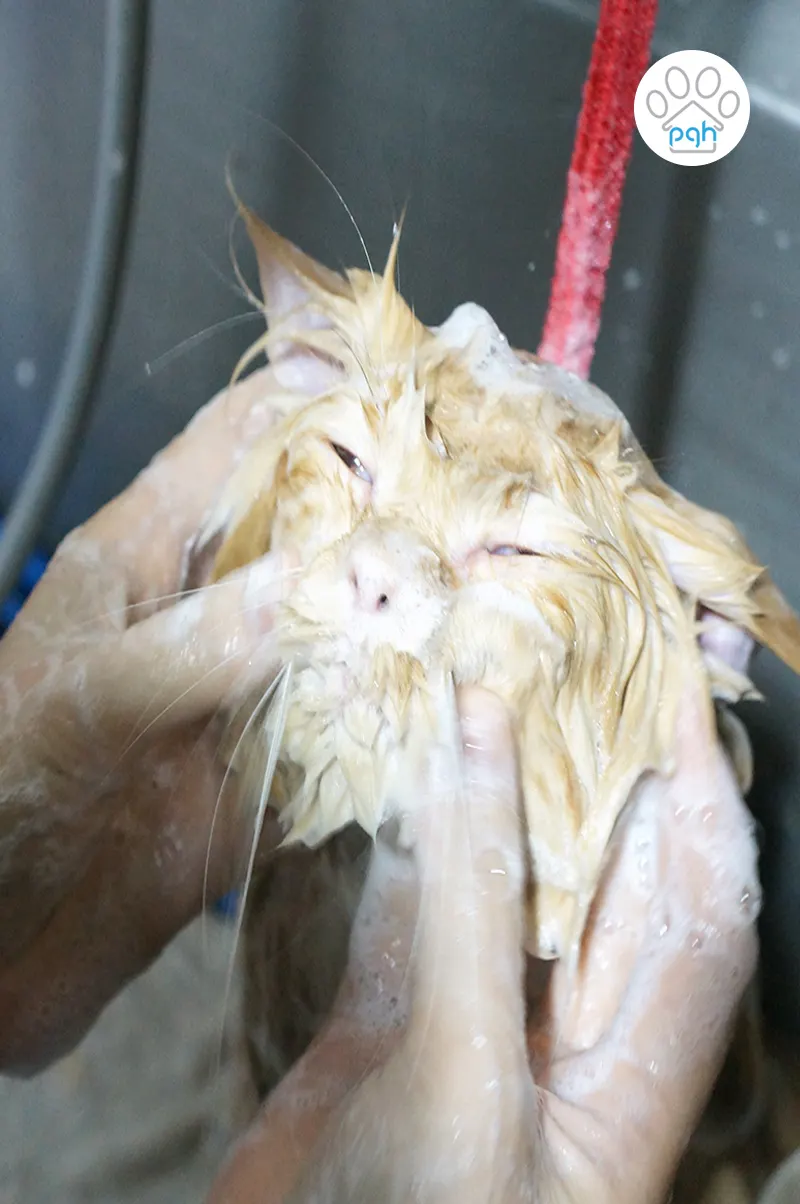
Most cats dislike being restrained more than they dislike water. An experienced groomer works quickly, keeps the water warm and low-pressure, and dries on a low-noise setting. Sessions are short. If your cat is very anxious, tell us at booking so we can schedule a quiet slot.
The hairball test
If your cat brings up a hairball more than about once a month, see a vet. Frequent hairballs can mean the cat is swallowing more fur than it can pass, but they can also be a sign of a gut problem, a skin problem that makes the cat over-groom, or other illness. Once the vet has ruled those out, brushing more often and a professional de-shed reduce the fur your cat swallows. Retching without bringing anything up, repeated vomiting, constipation or a cat that stops eating needs a vet the same day.
Questions we get asked
- Do cats need baths?
Healthy short-haired cats rarely need one. Long-haired cats, oily coats, elderly cats who have stopped grooming themselves, and cats with fleas may benefit from an occasional bath, often every one to three months. How often depends on the coat and the cat's health, so ask your vet if your cat has a skin condition.
- Is a lion cut cruel?
No, if it is done carefully and for a reason, such as heavy matting or an elderly cat that cannot groom. It is kinder than hours of dematting. Keep the cat indoors and out of direct sun afterwards.
- Can I trim my cat's nails at home?
Yes. Trim only the sharp tip, avoiding the pink quick, every two to three weeks. If your cat will not tolerate it, a groomer can do it in minutes.
Written by
The PGH team
Groomers and hotel staff at Pets Grooming Hotel, Main Place Mall, Subang Jaya. These guides are based on what we see on the grooming table and in the hotel every week. They are general advice, not a substitute for your vet.