Pet health · 6 min read
Cat vomiting and hairballs: when to worry
Why cats vomit, what yellow, white foam or food in the vomit can mean, when a hairball is normal, how brushing helps, and when a vomiting cat needs a vet today.
By John, Senior groomer · Reviewed by Agnes, Manager · Published
Most cats vomit now and then, and a hairball once every week or two is not unusual, according to Cornell Feline Health Center. Hairballs form because cats swallow loose hair when they groom, and long-haired cats such as Persians and Maine Coons get more of them. Common causes of vomiting also include eating too fast, a sudden change of food, eating grass or plants, and swallowed objects such as string. Kidney disease, hyperthyroidism, diabetes, worms, infections and inflammatory bowel disease can also cause it. Yellow liquid is usually bile and white foam is stomach froth, but the colour alone does not tell you the cause. See a vet promptly if your cat vomits more than once a week, vomits several times in a day, shows blood, stops eating, or seems weak or tired. Brushing removes loose hair before it is swallowed. In Subang Jaya, a PGH basic cat groom with full comb-out costs RM90 to 130. In Malaysia this search is usually typed as kucing muntah.
This is general information from a grooming and boarding team, not veterinary advice. PGH is not a vet clinic. If your cat is unwell, see a vet.
Why is my cat vomiting?
Cornell and the MSD Veterinary Manual list many causes. The common ones:
- Hairballs. Hair cannot be digested. Most of it passes out in the stool, but some collects in the stomach and comes back up.
- Eating too fast or too much, then bringing the food back up soon after.
- A sudden change of food. International Cat Care advises switching diets gradually to avoid vomiting and diarrhoea.
- Grass, plants and spoiled food. Some houseplants are poisonous to cats.
- Swallowed objects such as string, hair ties, rubber bands or parts of toys. These can block the gut.
- Human medicines and foods such as chocolate or onions.
- Worms and other parasites, especially in kittens.
- Illness, including kidney disease, hyperthyroidism, diabetes, pancreatitis, liver disease, inflammatory bowel disease and cancer. Older cats that start vomiting more often need a check-up.
Vomiting is also different from regurgitation. A vomiting cat heaves and its belly muscles contract. Regurgitation is passive: undigested food slides back up with little effort, often in a tube shape. Tell your vet which one you saw, because the causes are different.
Is my cat's vomiting OK to watch, or does it need a vet today?
| Sign | Usually OK to watch | See a vet promptly |
|---|---|---|
| How often | Once, or a hairball every week or two | More than once a week, or several times in one day |
| Appetite | Keeps eating normally | Stops eating, or refuses food for a day or more |
| Energy | Bright and playful | Tired, weak, hiding or collapsed |
| What comes up | Food, hairball, some yellow or white liquid | Blood, coffee-ground material, or retching with nothing coming up |
| Other signs | None | Diarrhoea, more thirst, more or less urination, a painful or swollen belly |
| Who | Healthy adult cat | Kitten, older cat, or a cat with kidney disease, diabetes or another illness |
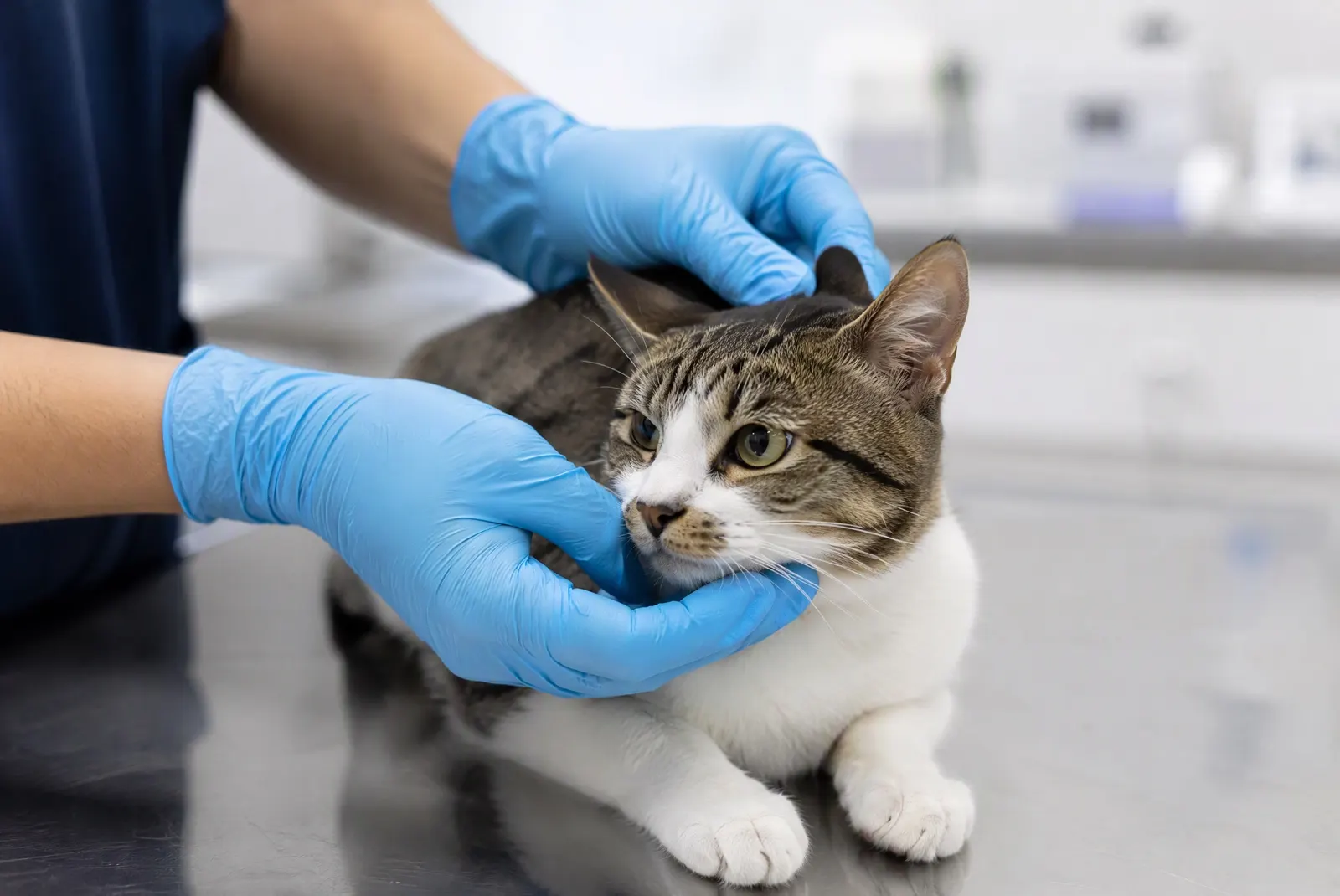
Go to a vet straight away if you think your cat swallowed string, a toy part, a medicine or a poisonous plant. Do not try to make your cat vomit at home. Our list of vet clinics in Subang Jaya and USJ includes clinics near us.
What does the colour of cat vomit mean?
- Yellow or green liquid is usually bile from the stomach and small intestine.
- White foam is froth from the stomach.
- Undigested food soon after a meal often means the cat ate too fast, or it may be regurgitation.
- A tube-shaped clump of hair, coloured like the coat and darkened by food and bile, is a hairball.
- Grass or plant pieces mean the cat has been eating plants. Check that none of your plants are poisonous to cats.
- Red blood, or dark material like coffee grounds, can mean bleeding in the stomach. See a vet the same day.
The MSD Veterinary Manual lists bile, froth and blood as possible signs of stomach inflammation, which has many causes. The colour helps your vet, but it does not give the diagnosis. Take a photo before you clean up.
Are hairballs normal?
Yes, within limits. Cornell says bringing up a hairball once every week or two is common and is not, by itself, a worry. Hairballs are usually not round. They come up as a damp, cylinder-shaped wad about 2.5 cm long, sometimes longer.
Some cats get more hairballs than others:
- Long-haired breeds such as Persians and Maine Coons.
- Adult and older cats, which spend more time grooming than kittens.
- Cats that shed heavily. Indoor cats in Malaysia often shed all year round. Our guide to cat hair loss and shedding explains why.
- Cats that over-groom because of itch, fleas or stress. Cornell notes that over-grooming can be a sign of a food allergy skin problem.
A hairball becomes dangerous when it is too big to pass and blocks the stomach or intestine. Cornell calls this uncommon but very serious, and it can be fatal without surgery. Signs include repeated retching with nothing coming up, refusing food and lethargy.
Is my cat coughing, not bringing up a hairball?
International Cat Care warns that coughing can look like a cat trying to be sick. The cat crouches low, stretches its neck out and may gag after coughing, and nothing comes up. That can be asthma or bronchitis rather than a hairball. Take a video to show your vet. Fast or open-mouthed breathing is an emergency.
How can I reduce hairballs?
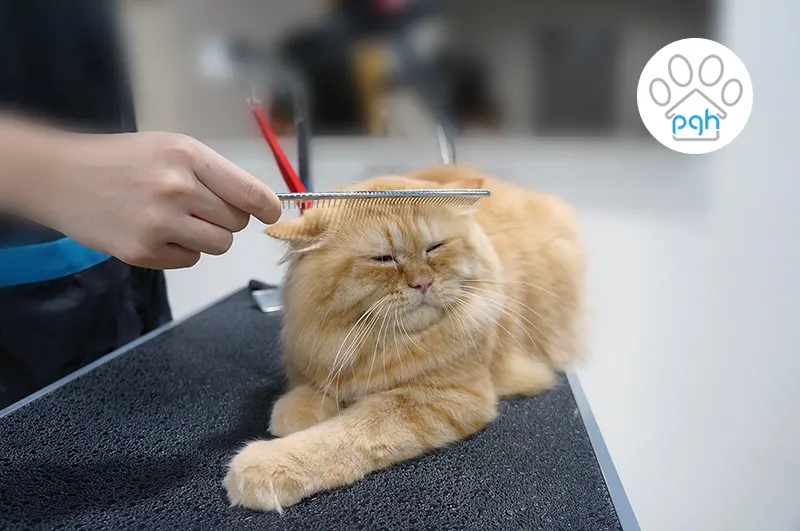
- Brush or comb often. Cornell recommends brushing and combing daily. International Cat Care says grooming your cat can help prevent or reduce hairballs. Short coats need a rubber brush or fine comb. Long coats need a wide-toothed comb first and a finer comb after.
- Brush more when the cat sheds more. That is when hairballs are most frequent.
- Treat itch and fleas. A cat that licks constantly swallows more hair. Our cat flea guide covers safe treatment.
- Ask your vet about hairball products. Pastes, treats and diets made to help hair pass exist, and the MSD Veterinary Manual says products such as mineral oil can help. Cornell advises never giving a laxative without a vet's approval, because the retching may not be a hairball.
Our guide on how often cats should be groomed gives a brushing schedule by coat type.
Can a professional groom help with hairballs?
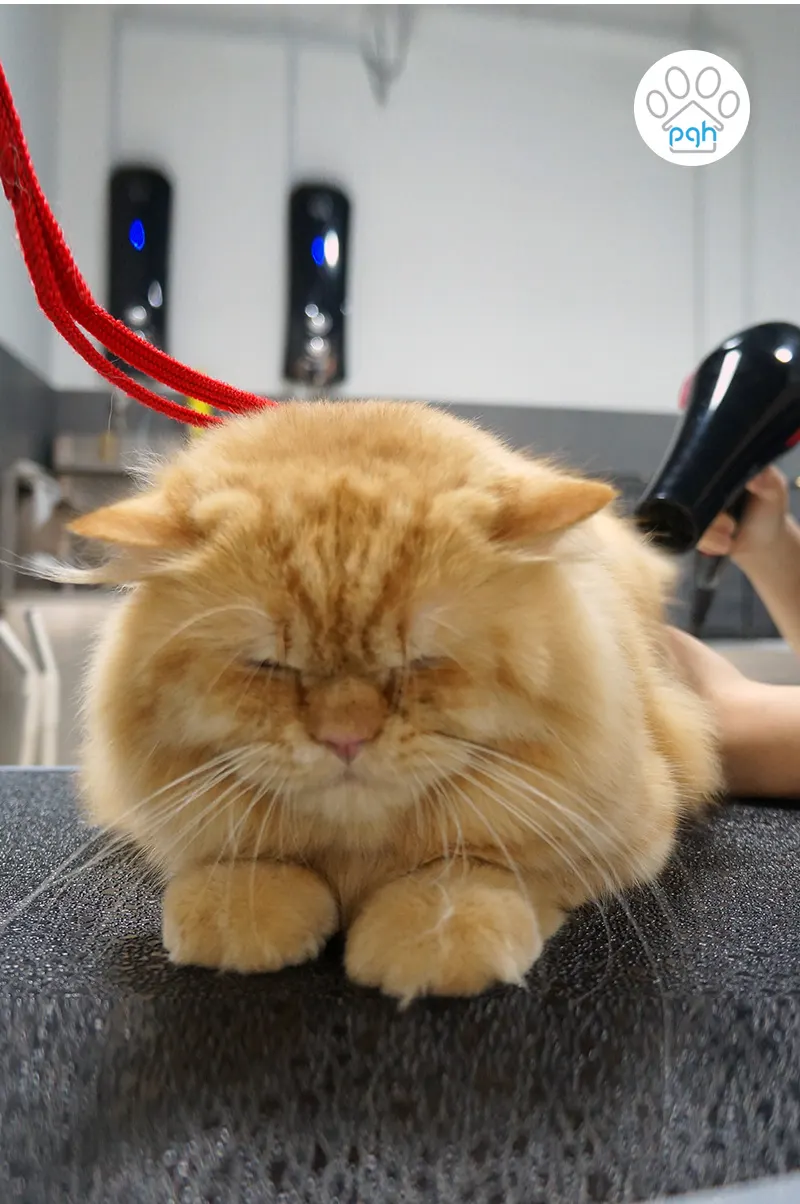
A groom does not treat vomiting, but a bath and full comb-out removes a large amount of loose undercoat at once. That helps long-haired cats and cats whose owners find daily brushing hard. PGH's basic cat groom includes a bath with massage, blow dry and full comb-out, nail trimming, ear cleaning, sanitary shave and paw trimming.
| Cat | Weight | PGH basic groom |
|---|---|---|
| Short coat | under 5 kg | RM90 to 110 |
| Long coat | under 5 kg | RM100 to 130 |
| Kitten | under 2 kg | RM60 to 80 |
Prices checked November 2026. Full prices and add-ons are on the cat grooming page.
Groom a cat only when it is well. A cat that is vomiting, not eating or lethargic should see a vet first, not a groomer. PGH may decline a pet that shows signs of illness at check-in, for grooming or for a cat hotel stay. If your cat has a history of hairballs or a sensitive stomach, tell us when you book a stay. PGH asks owners to bring their pet's own food so the diet stays the same, which avoids the vomiting a sudden food change can cause.
Questions we get asked
- Is it normal for a cat to vomit?
An occasional vomit in a cat that is otherwise eating, playing and using the litter tray normally is common. Cornell Feline Health Center says a cat that vomits more than once a week, or vomits with tiredness, weakness, poor appetite, blood, more thirst, changes in urination or diarrhoea, should see a vet promptly.
- How often is it normal for a cat to bring up a hairball?
Cornell says it is not unusual for a cat to bring up a hairball once every week or two without lasting problems. More often than that, repeated retching that brings nothing up, or a cat that stops eating, needs a vet.
- Why is my cat vomiting yellow liquid or white foam?
Yellow or green liquid is usually bile, and white foam is froth from the stomach. The MSD Veterinary Manual lists both as common in vomit from stomach inflammation, which has many causes. A single episode in a bright cat can be watched. Repeated episodes, blood, or vomit that looks like coffee grounds need a vet.
- Can I give my cat hairball paste or a laxative?
Ask your vet first. Hairball pastes and diets exist, and the MSD Veterinary Manual says products such as mineral oil can help some cats pass hair. Cornell advises never giving a cat a laxative without a vet's approval, because frequent retching may not be a hairball at all.
- Does brushing really reduce hairballs?
Yes. Cats swallow loose hair when they groom themselves, and International Cat Care says grooming your cat can help prevent or reduce hairballs. Cornell recommends brushing and combing daily, especially for long-haired cats such as Persians and Maine Coons.
Sources
- Cornell Feline Health Center: Vomiting
- Cornell Feline Health Center: The danger of hairballs
- MSD Veterinary Manual: Vomiting in cats
- International Cat Care: Grooming your cat
- International Cat Care: Asthma and chronic bronchitis in cats
- International Cat Care: Poisonous plants
- International Cat Care: How to change your cat's food to a new diet
Written by
John, Senior groomer
Groomers and hotel staff at Pets Grooming Hotel, Main Place Mall, Subang Jaya. These guides are based on what we see on the grooming table and in the hotel every week. They are general advice, not a substitute for your vet.