Pet health · 5 min read
Cat parvo (panleukopenia): signs, treatment and vaccine
Cat parvo signs, how fast it moves, how vets test and treat it, whether a cat can survive, how to clean the house, the vaccine schedule and cost in Malaysia.
By John, Senior groomer · Reviewed by Agnes, Manager · Published
Cat parvo is feline panleukopenia, a highly contagious and often fatal virus also called feline distemper or feline infectious enteritis. It attacks white blood cells and the lining of the gut. Signs start 2 to 7 days after exposure: fever, tiredness and refusing food, then vomiting, diarrhoea and dehydration. Kittens under 5 months can die suddenly. There is no medicine that kills the virus, so treatment is hospital care with drip fluids, anti-nausea medicine and antibiotics against secondary infection, usually for about a week. A cat that survives has lifelong immunity. The core combination vaccine, usually a 3-in-1, prevents it, and in Malaysia costs about RM50 to RM200 per dose at a private clinic. The virus survives in a house for up to a year, so cleaning with the right disinfectant matters. In Malaysia it is usually called parvo kucing.
This is general information from a grooming and boarding team, not veterinary advice. A cat with fever, vomiting or diarrhoea that has not been fully vaccinated needs a vet today.
What are the signs of parvo in a cat?
Most vaccinated adult cats exposed to the virus show no signs. Cats that fall ill are usually under a year old or unvaccinated. Watch for:
- Fever, tiredness and hiding, often the first sign.
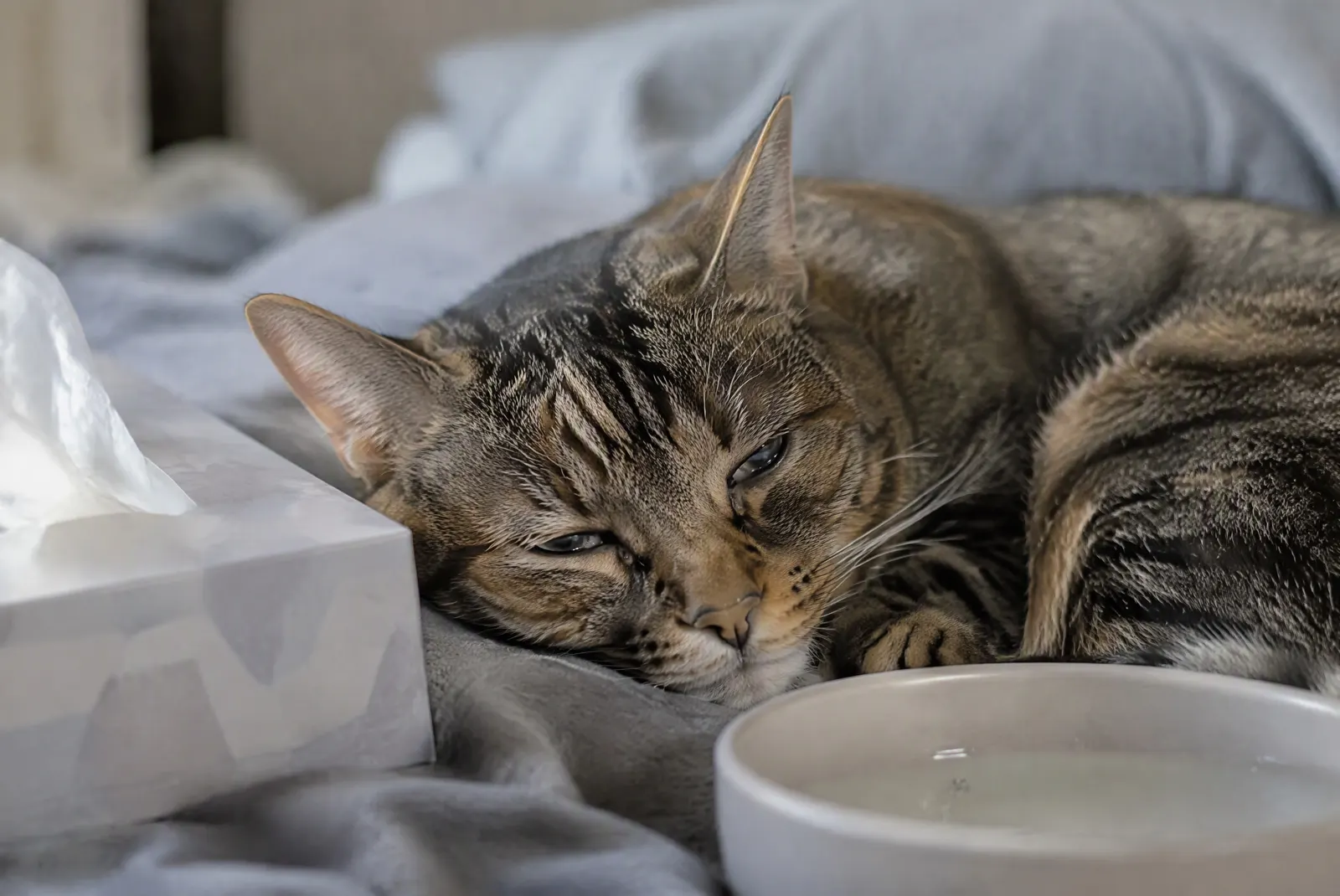
- Refusing food and water, sometimes sitting hunched over the water bowl without drinking.
- Vomiting, usually yellow or foamy and unrelated to meals, starting a day or two after the fever.
- Diarrhoea, which is not always present. Unlike dog parvo, it is usually not bloody.
- Dehydration: sunken eyes, dry gums and skin that stays tented when pinched.
- A painful belly: the cat cries or tenses when picked up.
- Sudden death, most often in kittens under 5 months, sometimes before other signs are noticed.
In a litter, one kitten after another often falls ill over several days. A pregnant cat that catches it can lose the litter, or give birth to kittens with cerebellar hypoplasia, which makes them walk unsteadily for life.
How fast does cat parvo progress?
| Stage | Timing |
|---|---|
| Exposure to first signs | 2 to 7 days, sometimes up to 14 |
| Fever to vomiting | 1 to 2 days |
| Acute illness | Seldom more than 5 to 7 days |
| Shedding virus after recovery | Up to 6 weeks, most stop after 2 |
Source: Merck Veterinary Manual. Because the illness moves this fast, waiting to see if a kitten eats tomorrow can cost its life.
How do vets test for parvo?
A vet suspects it from the signs, the cat's age and vaccine history, and any contact with other cats. A blood count usually shows very low white blood cells. Many clinics also run a quick faecal test for parvovirus antigen, but Merck notes these tests catch only 50 to 80% of cases, so a negative result does not rule parvo out. A PCR test from a lab is more reliable. A cat vaccinated in the last few weeks can test falsely positive, so tell the vet about recent vaccines.
Can a cat survive parvo, and how is it treated?
Yes. There is no antiviral cure, so the vet supports the cat while its immune system fights the virus:
- Drip fluids to correct dehydration, the main cause of death.
- Anti-nausea medicine to stop vomiting.
- Antibiotics against bacteria that cross the damaged gut.
- Feeding support, sometimes through a tube.
- Isolation from other cats in the clinic.
Most deaths happen in the first few days, which is why early treatment matters. Cornell says a cat strong enough to survive usually improves within about a week, then has lifelong immunity with no lasting effects. Treat at home only if your vet advises it.
Can people or dogs catch cat parvo?
Feline parvovirus does not infect people. Canine parvovirus, its close relative, can infect cats, and the cat vaccine also protects against it. The bigger risk is people carrying the virus. Cornell lists bedding, litter trays, cages, bowls, toys, fleas and the hands and clothes of anyone who has handled an infected cat. Indoor cats can catch it this way.
How do I clean parvo out of my house?
The virus survives indoors for up to a year and resists most ordinary cleaners, alcohol and soap. Merck lists three disinfectants that kill it:
| Disinfectant | Dilution | Contact time |
|---|---|---|
| Household bleach (about 6%) | 1 part to 32 parts water | 10 minutes |
| Potassium peroxymonosulfate | 1:100 | 10 minutes |
| Accelerated hydrogen peroxide | 1:16 | 5 minutes |
- Clean first, then disinfect. Faeces and vomit shield the virus from bleach.
- Throw away bedding, scratchers, toys and litter trays you cannot soak.
- Wash your hands and change clothes after handling a sick cat.
- Keep a recovered cat apart from unvaccinated cats for 6 weeks while it may still shed the virus.
- Wait before bringing a new kitten home. Ask your vet when, and make sure it has completed its vaccines.
Never use bleach or disinfectant on the cat itself.
Which vaccine prevents parvo, and how much does it cost?
Parvo is one of three core diseases in the cat combination vaccine, with calicivirus and herpesvirus (cat flu). In Malaysia this is usually sold as a 3-in-1 or 4-in-1.
| Government clinic | Private clinic | |
|---|---|---|
| Core combination vaccine, per dose | RM40–65 | RM50–200 |
Source: theSun price check (2024), as covered in our vaccination and neutering costs guide. These are not confirmed 2026 fees.
WSAVA guidelines start kittens at 6 to 8 weeks and repeat every 2 to 4 weeks until 16 weeks or older, usually three doses, then a booster at about 6 months to a year. After that, most adult cats need the core vaccine no more often than every three years. Antibodies from the mother can block early doses, which is why kittens need the full course. Your vet sets the schedule.
Can a kitten with parvo be groomed or board at a pet hotel?
No. A cat with parvo, or one that recovered within the last 6 weeks, can spread the virus to every cat that shares a room, a table or a dryer. PGH asks for a combination vaccine record for every cat at hotel check-in, and kittens with only one vaccination board at the owner's risk. We may decline a pet showing signs of illness. See our pet hotel vaccination rules and the cat hotel.
For a sneezing cat, read cat flu: signs and care. For a vet near us, see vet clinics in Subang Jaya and USJ, or government vet clinics in Selangor for lower-cost vaccines. PGH is in USJ 21, Subang Jaya: how to get here.
Questions we get asked
- What are the first signs of parvo in a cat?
Fever, tiredness and refusing food, usually 2 to 7 days after exposure. Vomiting tends to start a day or two after the fever, then diarrhoea and dehydration follow. Young kittens can die suddenly with few signs. Take a cat with these signs to a vet the same day.
- Can a cat survive parvo?
Yes, with early hospital care many do, and a cat that recovers has lifelong immunity. The illness rarely lasts more than 5 to 7 days, so the first days decide the outcome. Kittens and unvaccinated cats are most at risk of dying, often within a few days of admission.
- Is cat parvo contagious to people or dogs?
Feline parvovirus does not infect people. Its relative, canine parvovirus, can infect cats, and the cat vaccine also protects against it. The real risk to other cats comes from the virus carried on hands, clothes, shoes, bowls and litter trays.
- How long does parvo stay in the house?
Up to a year or more indoors without proper disinfection. Most ordinary cleaners do not kill it. Merck lists a 1:32 dilution of household bleach for 10 minutes, potassium peroxymonosulfate or accelerated hydrogen peroxide. Only bring in a new cat once it is fully vaccinated, and ask your vet first.
- How much does the cat parvo vaccine cost in Malaysia?
Parvo is covered by the core combination vaccine, usually a 3-in-1 or 4-in-1. A 2024 price check by theSun found RM50 to RM200 per dose at private clinics and RM40 to RM65 at government clinics. Kittens need about three doses.
Sources
Written by
John, Senior groomer
Groomers and hotel staff at Pets Grooming Hotel, Main Place Mall, Subang Jaya. These guides are based on what we see on the grooming table and in the hotel every week. They are general advice, not a substitute for your vet.