Pet health · 7 min read
Cat flu: signs, care and when to see a vet
Cat flu signs, safe home care, when a sneezing cat needs a vet today, why paracetamol is dangerous, whether people can catch it, and PGH's boarding rules.
By John, Senior groomer · Reviewed by Agnes, Manager · Published
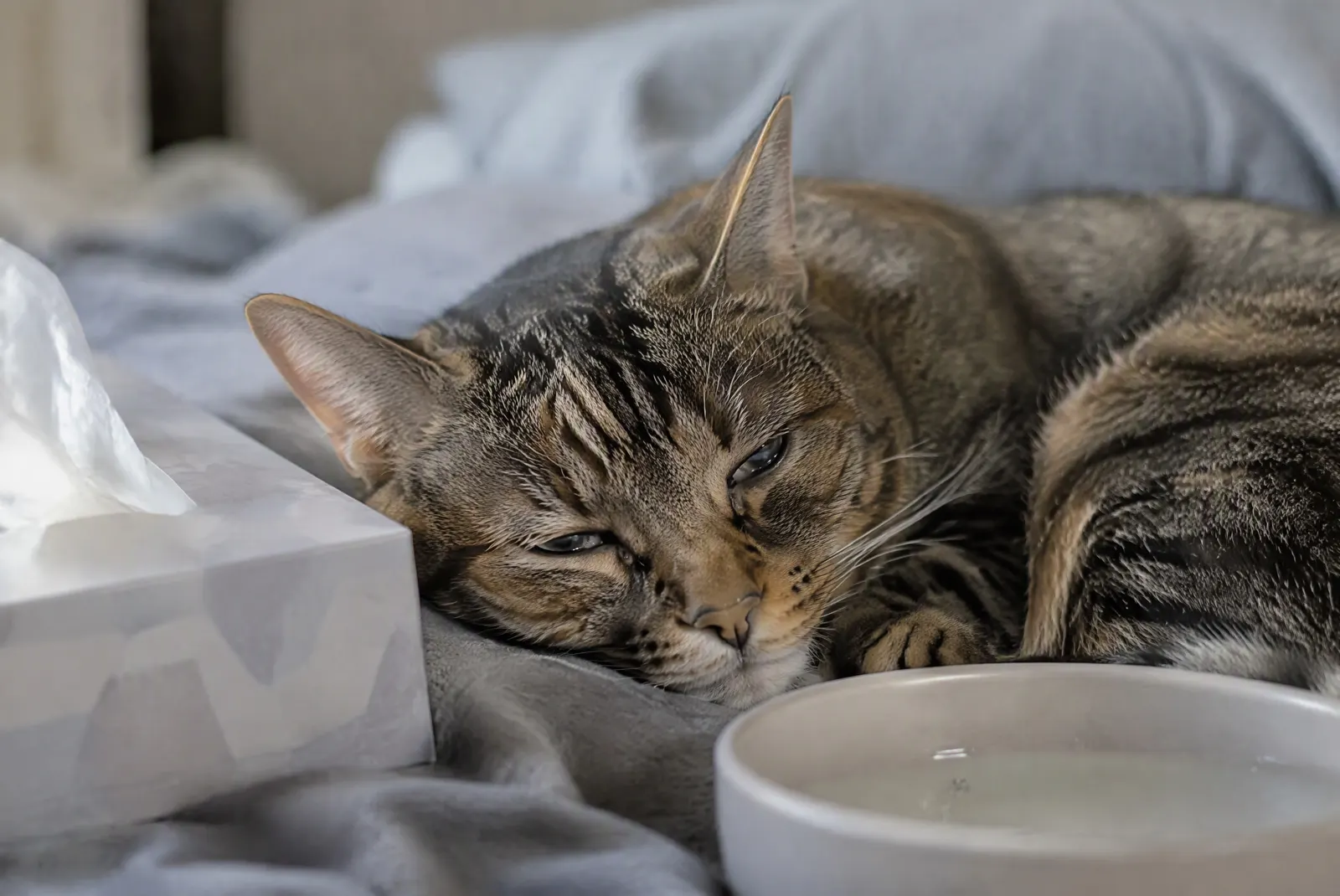
Cat flu is an infection of a cat's nose, throat and eyes. International Cat Care says more than 90% of cases are caused by one or both of two viruses: feline herpesvirus (FHV-1) and feline calicivirus (FCV). Look for sneezing, runny eyes and nose, red or sore eyes, mouth ulcers, fever, tiredness and a poor appetite. Mild cases usually clear in 5 to 10 days with good nursing: steam to loosen a blocked nose, gentle cleaning of the eyes and nose, and warm, strong-smelling soft food. See a vet the same day if your cat has not eaten for 24 hours, is a kitten, or struggles to breathe. Never give paracetamol or other human medicine. Cat flu does not spread to people, but it spreads easily to other cats. Most cats that recover carry the virus for life, and stress can bring the signs back. In Malaysia it is often called kucing selsema.
This is general information from a grooming and boarding team, not veterinary advice. If your cat is unwell, see a vet.
What are the symptoms of cat flu?
- Sneezing, often in fits.
- Runny eyes and nose. The discharge may start clear and turn yellow or green if bacteria join in.
- Red, swollen or half-closed eyes, with frequent blinking.
- Mouth ulcers and drooling, more typical of calicivirus. A cat with a sore mouth may go to the bowl and walk away.
- Fever, tiredness and a poor appetite. A blocked nose stops the cat smelling its food, and smell is what drives its appetite.
Signs appear 2 to 6 days after a cat catches the virus. Kittens, unvaccinated cats, older cats, stressed cats and cats living in large groups are most at risk of severe illness.
Is my sneezing cat OK at home, or does it need a vet today?
| Sign | Watch at home | See a vet today |
|---|---|---|
| Sneezing | Now and then, cat otherwise bright | Constant, with nosebleeds or a swollen face |
| Eye and nose discharge | Clear and watery | Thick yellow or green, or the eyes are swollen shut |
| Eating | Eating less, but still eating | Has not eaten for 24 hours |
| Breathing | Normal, through the nose | Breathing with the mouth open, or more than 35 breaths a minute at rest |
| Mouth | No drooling | Drooling, ulcers on the tongue, or refusing water |
| Energy | Sleeping more than usual | Hiding, weak or not responding |
| Age and health | Healthy adult cat | Kitten, senior cat, or a cat with another illness |
If you are unsure, phone your vet. Poor nutrition slows recovery, and a cat that will not eat or drink may need a drip or tube feeding. A vet can give fluids, pain relief and, if needed, antibiotics for a secondary bacterial infection. Most cats with mild cat flu recover in 5 to 10 days. Severe cases can take up to 6 weeks.
How can I care for a cat with flu at home?
Antibiotics do not kill the viruses, so treatment is mostly nursing that keeps the cat comfortable, eating and drinking while its body fights the infection.
- Steam. Sit with your cat in a closed bathroom while a hot shower runs. The warm, damp air helps loosen a blocked nose. Keep the cat well away from the hot water.
- Clean the eyes and nose several times a day with a cotton pad dampened with clean warm water or saline. Use a fresh pad for each eye.
- Warm, smelly food. Gently warm soft food, such as wet kitten food or fish in oil, so the cat can smell it. Offer small amounts often. Test the temperature with your finger first.
- Water. Keep fresh water close by. A sore mouth makes drinking hard, so watch that the bowl goes down.
- Rest and warmth. Give a quiet, warm spot away from other cats.
- Keep sick cats apart. Use separate bowls, litter trays and bedding, and wash your hands after handling the sick cat.
Can I give my cat paracetamol or human flu medicine?
No. Paracetamol (acetaminophen, sold as Panadol and other brands) is dangerous to cats. Cats cannot break it down safely, and it damages their red blood cells and liver. The MSD Veterinary Manual says poisoning usually occurs at 40 to 50 mg/kg, and some cats have shown signs at 10 mg/kg. One 500 mg tablet is about 125 mg/kg for a 4 kg cat. Ibuprofen and aspirin are also dangerous to cats.
Do not give human cold and flu medicines, nasal sprays or leftover antibiotics either. If your cat has swallowed any human medicine, take it to a vet straight away. Cats with cat flu often need pain relief for a sore throat and eyes, and your vet can prescribe one that is safe for cats. That is the real answer to "ubat selsema kucing".
Can humans catch cat flu from a cat?
Generally no. The MSD Veterinary Manual says feline herpesvirus and calicivirus infect cats only and pose no known risk to people. Chlamydia felis, a less common cause of cat flu, has been reported to cause eye infections in people, so wash your hands after cleaning your cat's eyes.
Cat flu does spread easily to other cats. Sick and carrier cats shed the virus in sneezes, saliva, tears and nose discharge. It also travels on hands, clothes, bowls and bedding, and can survive on objects for up to 2 days (herpesvirus) to 10 days (calicivirus). Keep a sick cat away from other cats, and away from kittens in particular, until it has recovered.
Why does my cat's flu keep coming back?
Most cats that recover from cat flu become carriers. Cornell Feline Health Center says up to 80% of cats exposed to feline herpesvirus stay infected for life, and up to 45% of those shed the virus from time to time, usually when stressed. A move, a new cat in the house, surgery or a stay away from home can trigger a flare-up of sneezing or sore eyes. These flare-ups are often mild and clear up on their own, but see a vet if your cat stops eating or the eyes are badly affected.
Calicivirus works differently. Most cats shed it for weeks or months after infection, and most eventually clear it within a few months.
If your cat has had cat flu before, tell us when you book a stay, so we can watch for early signs and keep its routine as calm and familiar as possible. Our first-stay checklist covers ways to lower stress, such as bringing a blanket that smells of home.
Does the cat vaccine prevent cat flu?
It greatly reduces the risk, but it does not always stop infection. The core combination vaccine for cats, usually a 3-in-1, covers feline herpesvirus and calicivirus together with panleukopenia. Cornell says the herpesvirus vaccine does not prevent infection in all cases but makes illness milder and reduces the amount of virus a cat sheds. The calicivirus vaccine is not 100% protective but lowers the chance of severe disease.
A vaccinated cat that catches cat flu usually has milder signs. Kittens need a course of doses, and protection takes about two weeks to build after the last one. A core combination vaccine costs about RM40 to RM65 per dose at a government veterinary clinic and RM50 to RM200 at a private clinic, according to a 2024 price check by theSun. Our pet vaccination and neutering costs guide has the full breakdown.
Can a cat with cat flu be groomed or board at PGH?
Not while it is sick. A groom or a hotel stay puts other cats at risk, and the stress of a bath, a dryer or a new place makes a sick cat feel worse. What PGH asks:
- Vaccination. Every cat that boards needs at least one combination vaccine. Kittens with one vaccination board at the owner's own risk. A clear photo of the vaccination record is accepted. Our pet hotel vaccination guide has the details.
- Signs of illness. PGH may decline a pet that shows signs of illness at check-in, to protect the other guests.
- Recovered first. A cat that is sneezing, has runny eyes or nose, or is off its food should not be groomed or boarded until it has recovered. Reschedule, and book again once your cat is well.
For a vet near us, see vet clinics in Subang Jaya and USJ. Rooms and rates are on the cat hotel page. PGH is in USJ 21, Subang Jaya: how to get here.
Questions we get asked
- What are the symptoms of cat flu?
Sneezing, runny eyes and nose, red or sore eyes, mouth ulcers, fever, tiredness and a poor appetite. Signs range from a few days of sneezing to severe illness. Mild cases usually last 5 to 10 days. Severe cases can last up to 6 weeks.
- Can I give my cat paracetamol or human flu medicine?
No. Paracetamol damages a cat's red blood cells and liver, and the MSD Veterinary Manual reports signs at doses as low as 10 mg/kg. One 500 mg tablet is about 125 mg/kg for a 4 kg cat. Ibuprofen and aspirin are also dangerous. Ask your vet for pain relief made for cats.
- Can humans catch cat flu?
Generally no. The two main cat flu viruses, feline herpesvirus and feline calicivirus, infect cats only and pose no known risk to people. They do spread easily to other cats, including on your hands, clothes and shared bowls, so wash your hands after handling a sick cat.
- Does the cat vaccine stop cat flu?
It greatly reduces the risk and makes illness milder, but it does not always prevent infection. The core combination vaccine covers both herpesvirus and calicivirus. A vaccinated cat can still catch cat flu and usually has milder signs and sheds less virus.
- Can a cat with cat flu be groomed or board at a pet hotel?
Not while it is sick. Cat flu spreads to other cats through sneezes, discharge, hands and shared items. PGH requires at least one combination vaccine for boarding and may decline a pet showing signs of illness. Book again once your cat has recovered.
Sources
Written by
John, Senior groomer
Groomers and hotel staff at Pets Grooming Hotel, Main Place Mall, Subang Jaya. These guides are based on what we see on the grooming table and in the hotel every week. They are general advice, not a substitute for your vet.